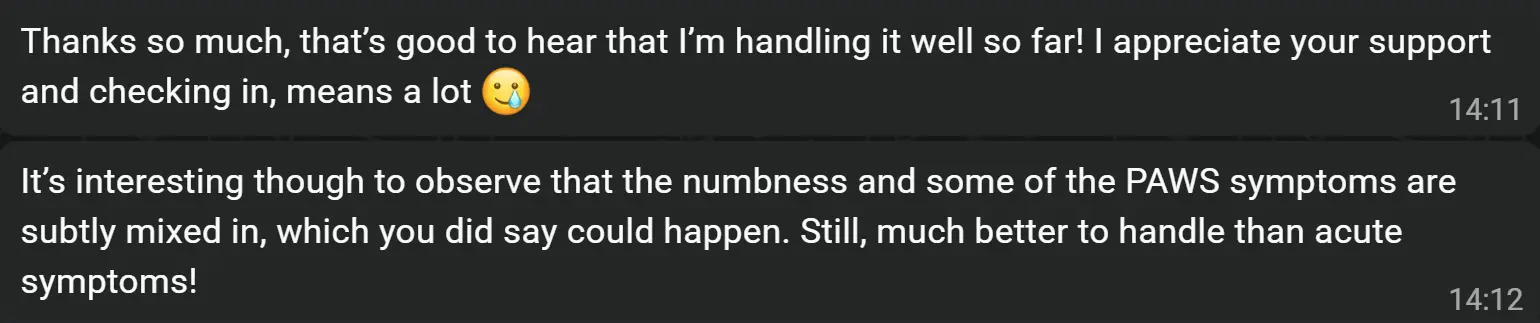
This approach focuses on how your nervous system actually adapts, not on rushed schedules or guesswork.
I work with people who are exhausted, discouraged, and ready for a method that finally makes sense.
Any medication changes are made in collaboration with your prescribing physician. The program is educational and supportive in nature.
If what you’ve just watched resonates with your experience, the next step is a short discovery call. We’ll look at your history, your current symptoms, and whether this framework applies to you.





Your symptoms don’t feel like your original condition, yet you keep hearing that it’s the illness coming back.
You want to come off antidepressants, but every attempt feels risky — so you stay on them out of fear.
You’ve been dealing with symptoms for a long time, wondering if this is temporary or something permanent.
You’re done experimenting and want a structured, rational approach that actually respects how the nervous system works.
Process
Built around how the nervous system adapts, with a clear, guided process that helps you understand where you are, what comes next, and how to move forward step by step without forcing or guessing.
Step 1
We start by understanding your medication history, current symptoms, and nervous system state — not just the dose you’re on.
Step 2
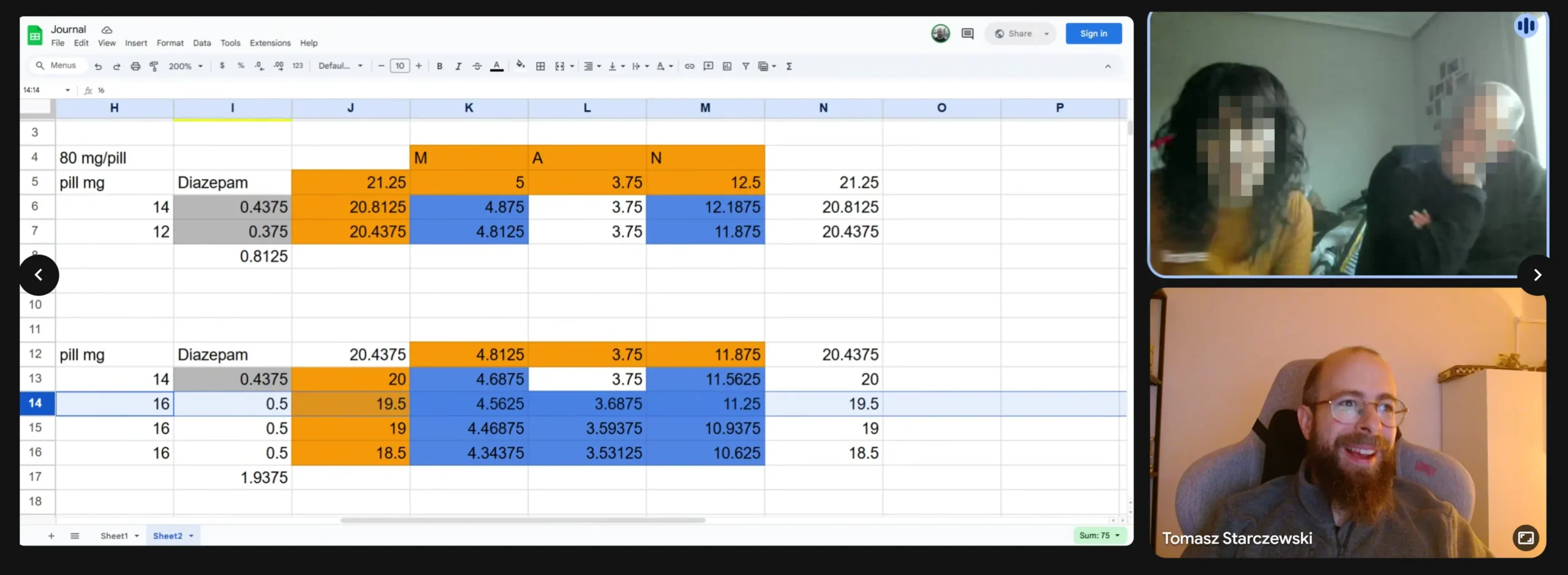
Dose reductions become progressively smaller, following the brain’s non-linear response to antidepressants.
Always in collaboration with a doctor.
Step 3
Your reactions guide the pace. When symptoms appear, the process adapts instead of pushing forward.
The brain doesn’t adapt in straight lines, but most tapering plans assume it does.
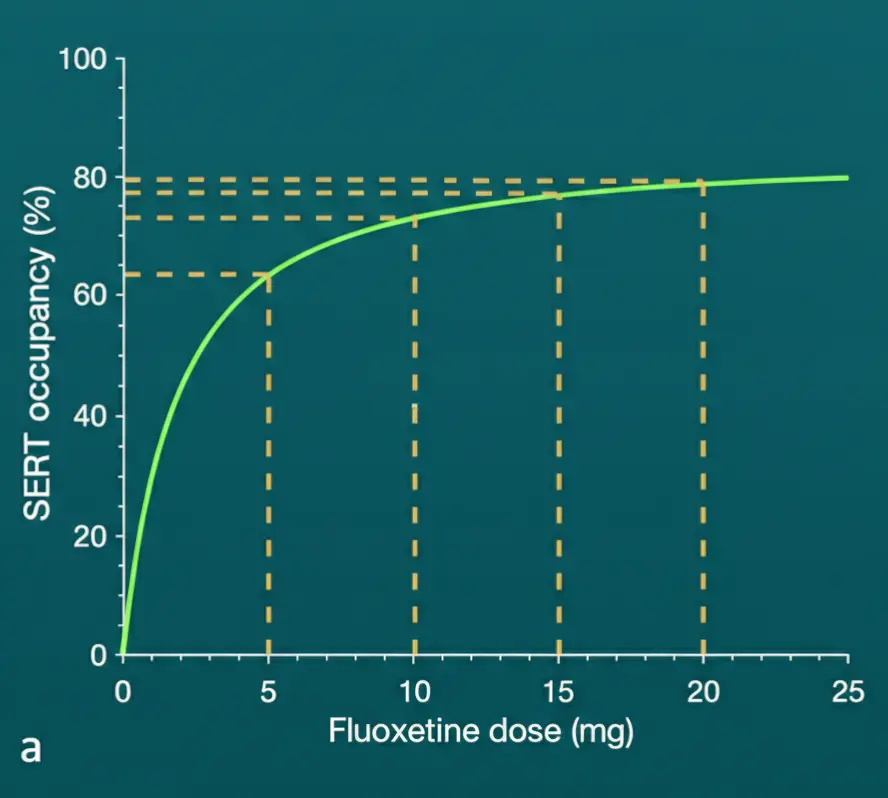
Antidepressants affect receptors in a non‑linear, hyperbolic pattern. This means the smallest dose changes, especially at lower doses, can have the biggest impact on your nervous system.
Standard tapering schedules rarely account for this. They focus on dose numbers, not on how the nervous system is responding in real time.
The result is often instability, escalating symptoms, and loss of trust in the process.
My approach is built on a simple reframing:
The goal is not to “get off medication as fast as possible”, but to keep the nervous system regulated while reductions happen
Reductions become progressively smaller, not equal
The nervous system’s response matters more than the calendar
Slowing down is sometimes the fastest way forward
The tapering process is conducted under the supervision of your physician, while my role is educational guidance and structured support.
Hi, I’m Tomasz Starczewski.
I was on antidepressants for 10 years, and when I tried to come off them, I struggled with severe withdrawal symptoms and PSSD. This experience completely disrupted my life and derailed my future plans.
Today, I have recovered—I’ve regained my emotions, sexuality, and cognitive functions. Now, I dedicate myself to helping others who are going through similar struggles.

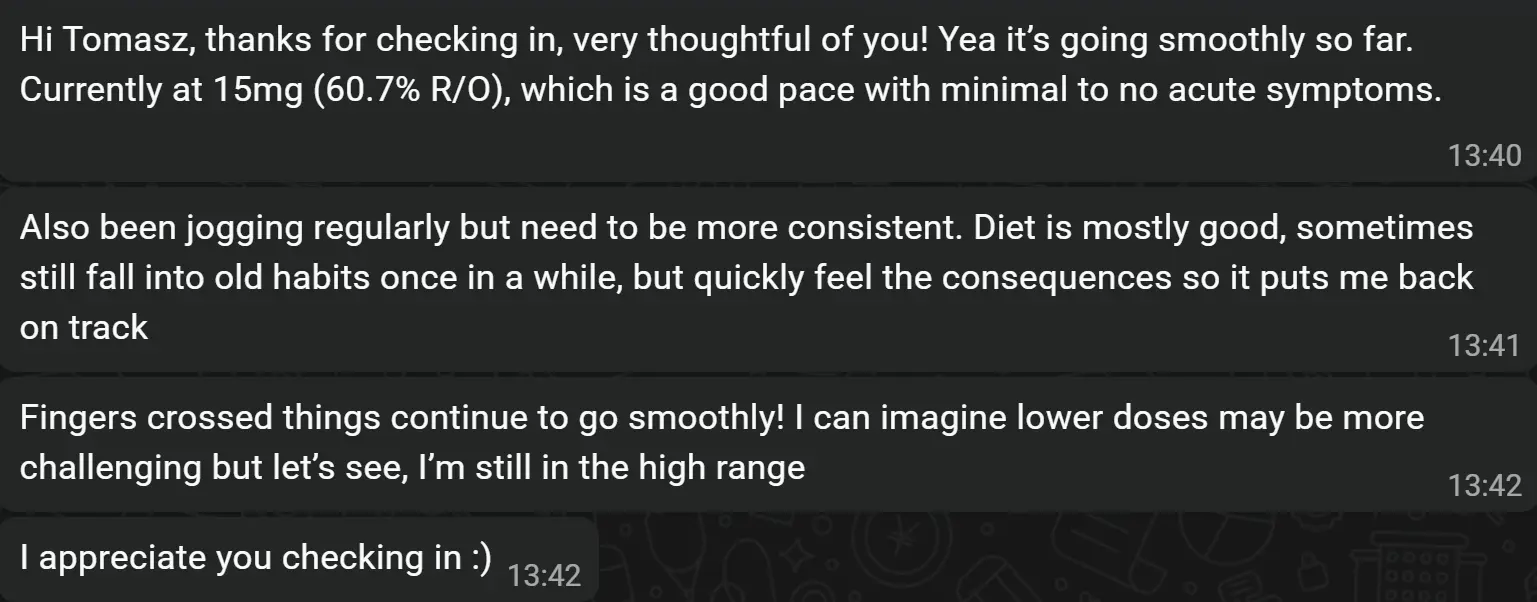
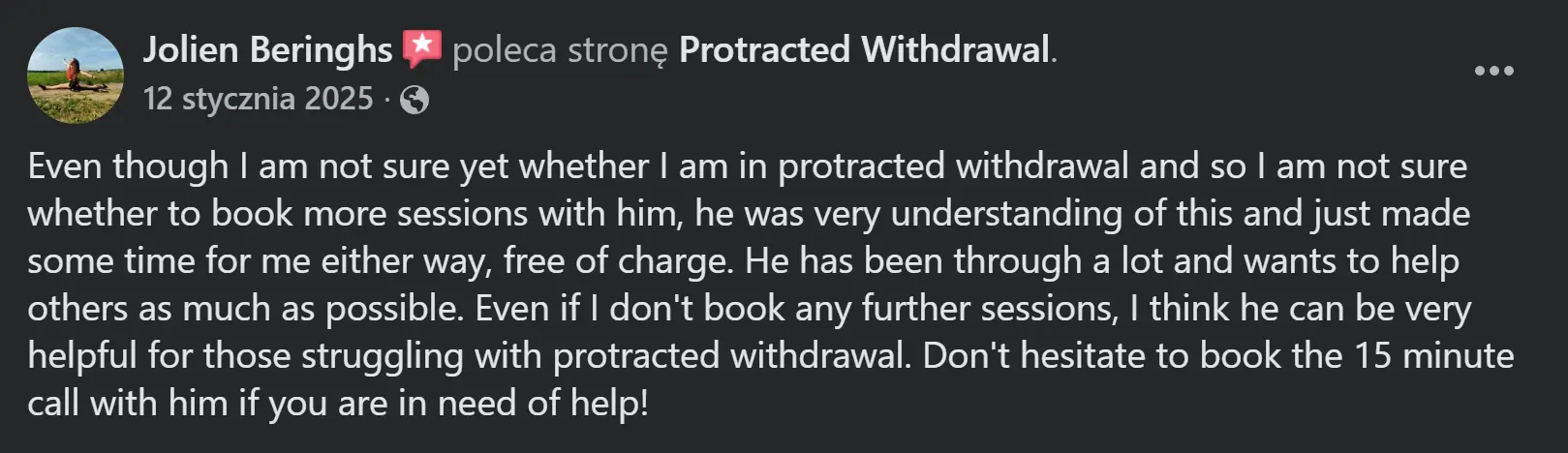
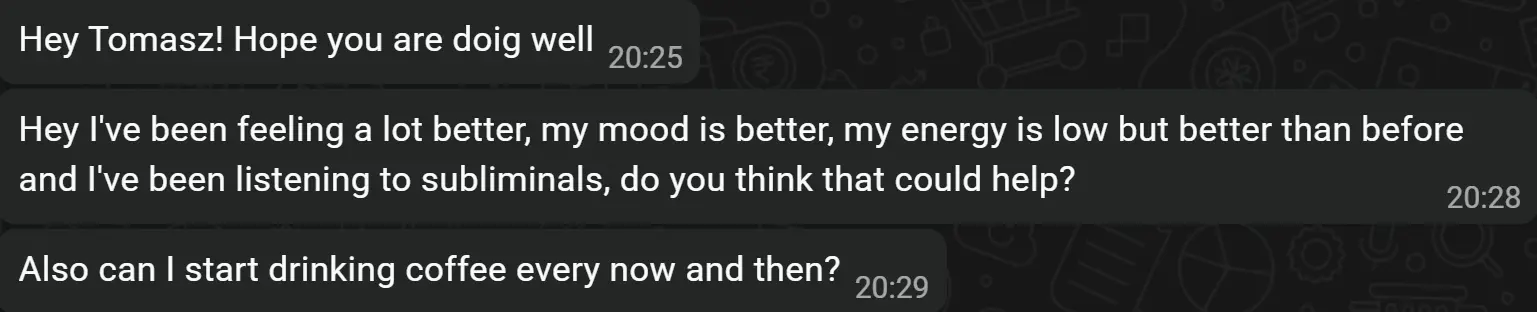
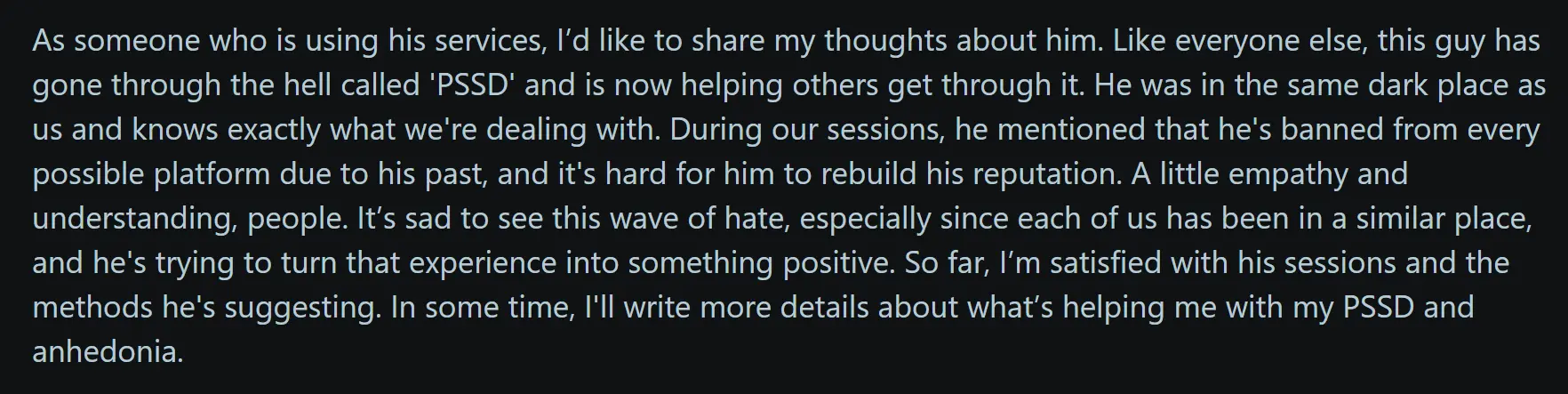
I’ve already supported 100+ people who felt stuck, misunderstood, or afraid to try again — helping them reduce risk, regain stability, and move forward at a pace their nervous system could handle.
My approach combines lived experience with a background in cognitive science and neurobiology, with a strong focus on safety, adaptation, and realistic pacing.
Would you like to learn more about me?
Visit my full website here.
100+ people helped
I walked this path
This is not a single consultation or a generic tapering template. It’s a guided process designed to support both dose reduction and nervous system stabilization over time.
A detailed initial assessment of your medication history, previous attempts, current symptoms, and overall stability
A personalised hyperbolic tapering strategy tailored to your specific medication and response pattern. An educational dose-reduction plan designed to be discussed with your prescribing physician.
Ongoing one-to-one sessions to monitor symptoms and adjust pacing when needed
Guidance in distinguishing withdrawal effects from relapse or unrelated conditions
Practical tools to regulate the nervous system and reduce withdrawal volatility
Support between sessions during difficult phases
The focus is always the same: reduce your risk, protect your stability, and move forward at a pace your nervous system can safely tolerate.
Book a FREE 15-minute call to see if my approach will work for you!
A discovery call is a structured, one-to-one conversation where we look at your medication history, current symptoms, and previous tapering attempts.
During the call, we will:
If it makes sense to move forward, we’ll discuss the appropriate level of support. If not, you’ll leave with clearer understanding of where you stand.
I do not provide medical advice or make treatment decisions — I support you in structuring the process and communicating effectively with your physician.
No. This program is educational and supportive in nature. I do not provide medical services, diagnose conditions, or make treatment decisions. Any medication changes must be discussed and approved by your prescribing physician.
There is no universal schedule. The pace depends on your medication history, current stability, previous reactions, and how your nervous system responds over time.
We look at timing, symptom patterns, dose changes, and nervous system behaviour. While it isn’t always black and white, there are identifiable patterns that help differentiate the two.
Worsening symptoms are treated as information, not failure. The process adapts. Reductions may pause, slow down, or stabilisation may be prioritised.
Yes. Many clients begin while still on their current dose. Stabilisation often comes before any reduction.
Primarily antidepressants and related psychiatric medications, including SSRIs, SNRIs, and other commonly prescribed agents. Each case is assessed individually.
There is no fixed timeline. The goal is not speed, but nervous system stability and sustainable recovery.
That’s exactly what the discovery call is for. It’s a focused conversation to assess fit, clarify your situation, and determine whether this structured approach makes sense for you.
Would you like to learn more about me? Visit my full website here.
Disclaimer
This program provides educational guidance and peer support. It is not medical treatment.
Tomasz Starczewski is not a medical doctor and does not diagnose, prescribe, or replace professional healthcare. Any decisions about medication should be made in consultation with a qualified healthcare provider.
The program does not replace psychiatric or medical care and should not be considered a substitute for professional medical treatment.
Answering the questions below will help me better understand your situation.